"🥨 THE BRETZEL STRETCH - Yes that’s a BRETZEL with a B. This is hands down my favorite post training/cool down stretch I like to ...
"🥨 THE BRETZEL STRETCH - Yes that’s a BRETZEL with a B. This is hands down my favorite post training/cool down stretch I like to perform. - You may find it challenging to grab the back foot, if that’s the case then use a band or strap to loop around your foot. - Make sure to keep your hips stacked to protect your low back. - ✅ MAKE IT BETTER by relaxing into rotation using your exhale. - Thanks to @wakethewolves for this awesome T Shirt! 🙌🏽
#movement #healthybody #healthymind #healthylife #wellness #wellbeing #instapilates #choosephysio #physiogram #sportsperformance #sportsperformancehub #instaphysio #prehab #visualcontent #contentcreator #wellnessjourney #holistichealth #mindbodyspirit #liveinspired #nourishyourself #physique #painrelief #corestrength #strongcore #coregoals #bestlifeproject #bodyhack #bodyhackuae #gymnastics #athlete
RepostBy @deathofthedesk:
https://www.instagram.com/p/Bspw4CIlCwO/
A headache is not just a headache. Considering half of all adults have experienced the pounding at least once in the last year, properly id...
A headache is not just a headache. Considering half of all adults have experienced the pounding at least once in the last year, properly identifying where your head hurts can uncover the best treatment to get rid of the ache.
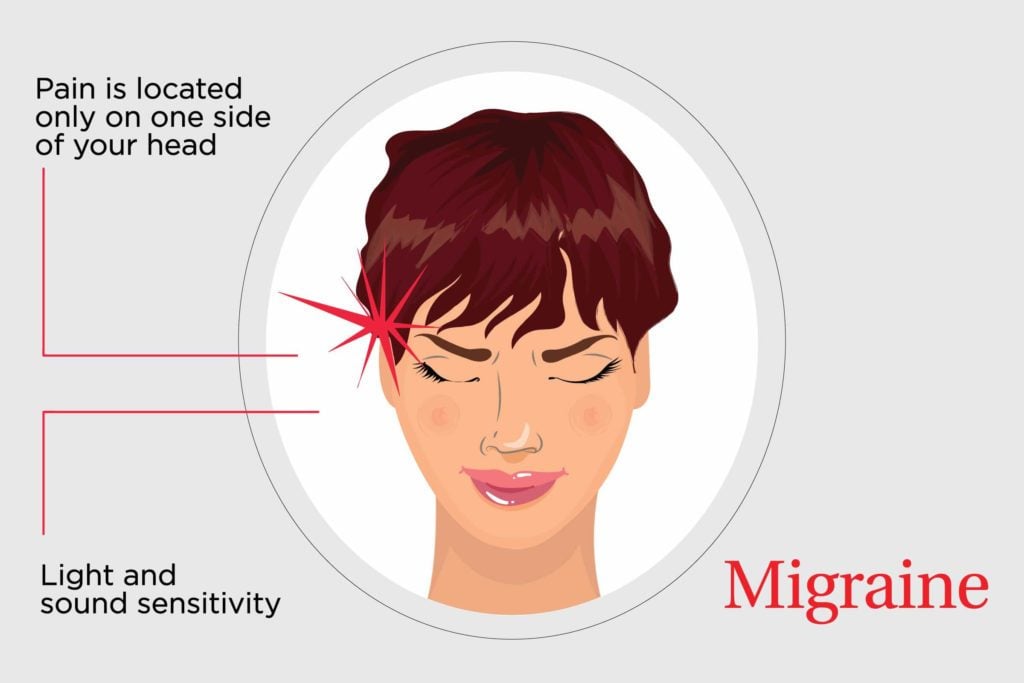
1) One side of your head: Migraine
TATIANA AYAZO /RD.COM
If the pain is located only on one side of your head (either the left or the right) and it feels like it's throbbing or pulsating, it's likely a migraine. And while there are more than a dozen reasons why you might suffer from migraines, there's no question that they're rough to get through. "This pain typically is severe and affects your functioning," says Raissa Villanueva, MD, MPH, a neurologist at the University of Rochester Medical Center. It may also come with other debilitating symptoms like light and sound sensitivity. As for how to get rid of a headache in this instance, your best option is to stop what you're doing and rest, she advises. If they're frequent enough to affect your life, seek help from a doctor who may look into a preventative Rx.
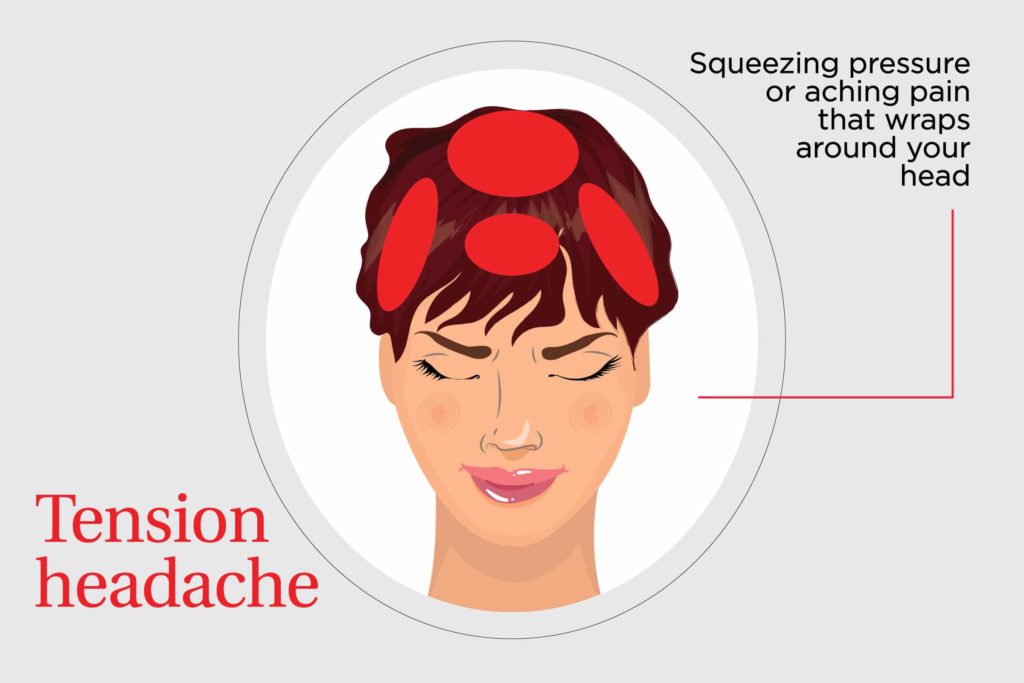
2. Wraps around your head: Tension headache
headaches—because these are no fun. "Patients often say it's like having a vice around their head," says Villanueva. Taking OTC pain relievers like NSAIDs or acetaminophen as directed can nip the pain in the bud. Even better: Combo medications containing aspirin, acetaminophen, and caffeine have been found to give sufferers relief two hours later compared to taking acetaminophen alone or a placebo, per research in The Journal of Headache and Pain. (Caffeine may help make the active ingredients more potent.)
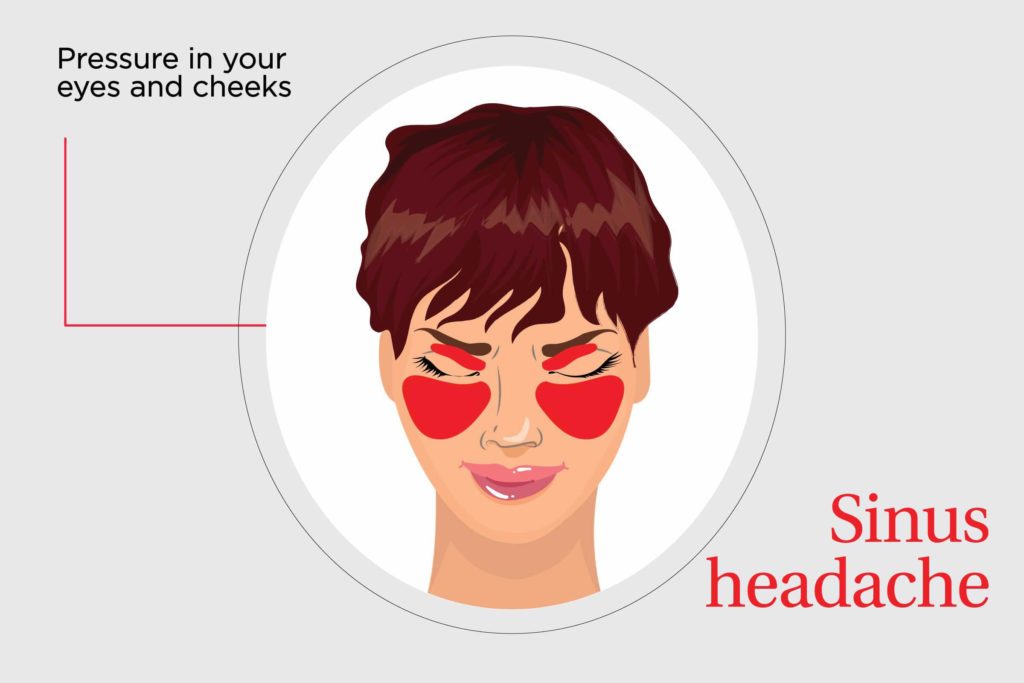
3. In your face: Sinus headache
TATIANA AYAZO /RD.COM
If you feel pressure in your eyes and cheeks, you probably assume sinus headache. But these are actually pretty rare and are often actually migraines, which are the more likely cause of facial pain, notes Villanueva. If you've been diagnosed with a viral or bacterial infection (and have clear symptoms of a sinus infection like aching teeth, lack of smell), your doctor will likely prescribe antibiotics (if it's bacterial) or suggestnasal decongestant sprays or antihistamines.
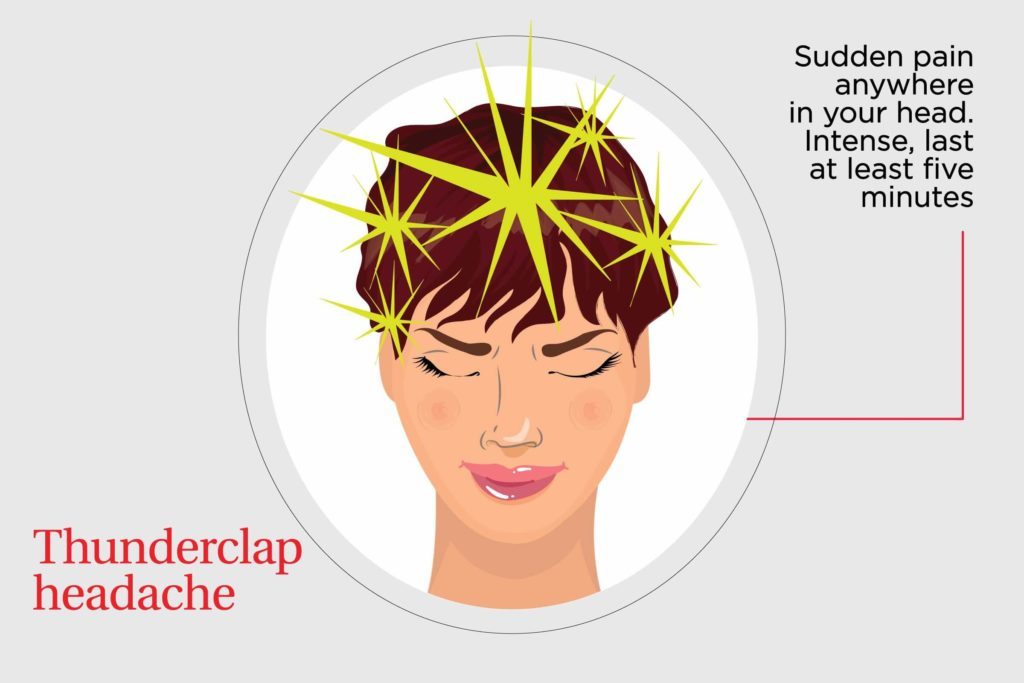
4. Sudden pain anywhere in your head: Thunderclap headache
 TATIANA AYAZO /RD.COM
There are at least 16 signs that your headache is something far more serious—and a thunderclap headache can be one of them. It feels like a lightning strike inside your head. They are intense, last at least five minutes, and you may not know why they're happening, according to the American Migraine Foundation. When you're talking about types of headaches, this one should send off alarm signals. If you experience one, get in touch with your doctor or go to the ER. They can be caused by life-threatening conditions like a brain aneurysm, stroke, or a brain hemorrhage. Get help ASAP. (These are the 6 scary signs of a brain aneurysm everyone should know
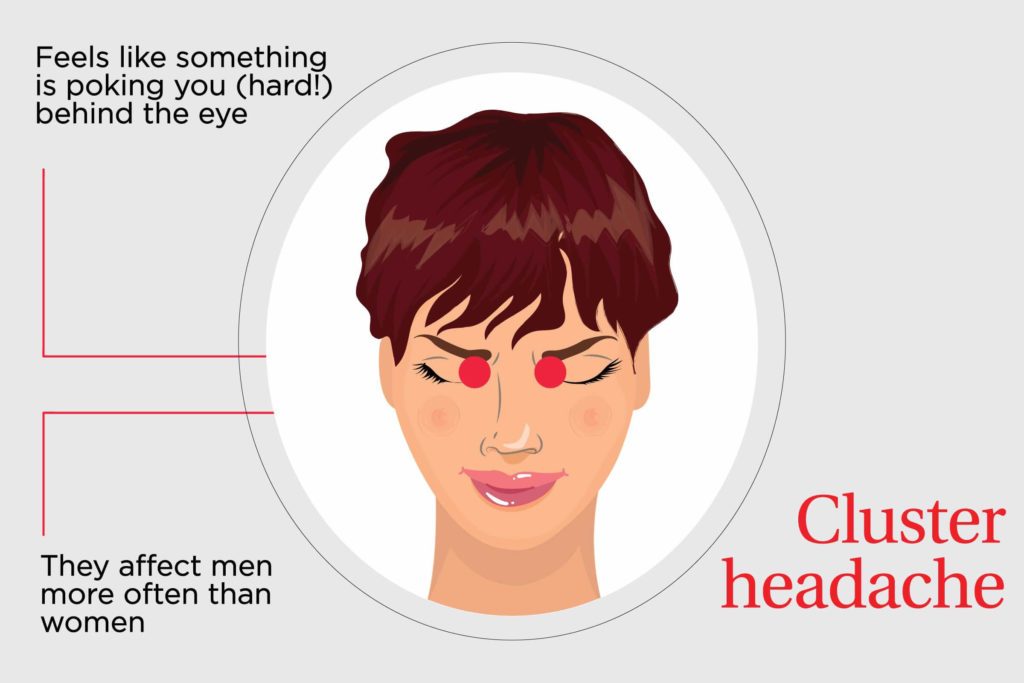
5. Behind your eye: Cluster headache
TATIANA AYAZO /RD.COM
If it feels like something is poking you (hard!) behind the eye, it may be a cluster headache. "These are also called suicide headaches because the pain is very, very severe," says Villanueva. They affect men more often than women, and are associated with other symptoms like redness in the eye with the pain, tearing in that eye, nose running on that side, or droopiness of the eyelid on that side, she adds. You may also feel agitated and want to get up and pace. Unfortunately, as Villanueva notes, people suffer through them for years before getting diagnosed. The right diagnosis is so important because they're treated differently than migraines (which also hit on one side). As for how to get rid of a headache like this, your MD may suggest high-flow oxygen treatment (where you inhale oxygen from a face mask). You may also try a cold compress—here's how.
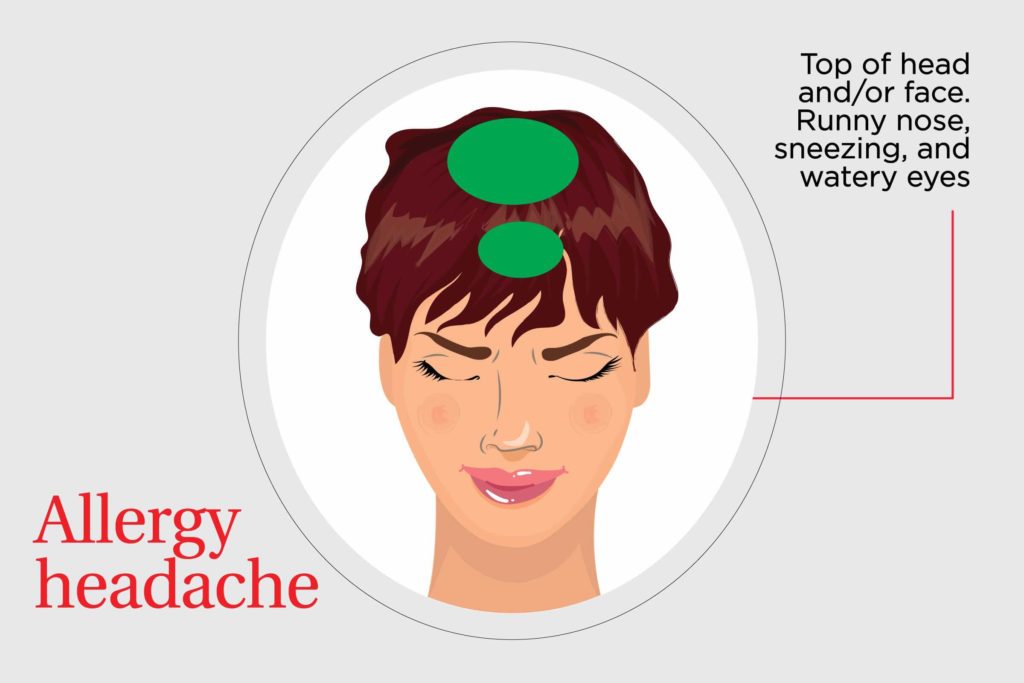
6. Top of head and/or face: Allergy headache
TATIANA AYAZO /RD.COM
Although they involve the sinuses, allergy-induced headaches are seasonal, and you'll experience other symptoms like runny nose, sneezing, and watery eyes. You'll want to get a diagnosis from your doctor to correctly ID the problem. For headache relief, treatment includes avoiding allergy triggers, while using OTC or prescription antihistamines and decongestants, says Villanueva. If you're looking for natural remedies for headache relief, here you go.
7. Stabbing pain on one side: Airplane headache
TATIANA AYAZO /RD.COM
As if air travel wasn't hard enough, one in 12 people suffer from something called airplane headaches. (Here's how to prevent them.) They're set off by changes in pressure during the airplane trip. To lower your risk of getting one, try to manage your stress (not always an easy thing in an airport), stay hydrated, and take an OTC painkiller when you feel the ache approaching.
8. Anywhere around your head: Exertional headache

TATIANA AYAZO /RD.COM
You'll know your head pain is triggered by something very specific—exercise, orgasm—if it happens during or after the activity. You could try some home remedies for headaches. Exertional headaches may stick around for five minutes up to two days, according to the American Migraine Foundation (AMF). They also have rather variable symptoms, says Villanueva. "They can be severe, one-sided, pulsating, aching, or make you nauseous," she says. It's actually rare (and exercise-triggered migraines are different), but you need to see a doctor who will evaluate you for an underlying reason for the pain, as well as more serious causes like a hemorrhage. The good news is that if there's no medical problem causing these headaches, they typically go away after six months. In the meantime, taking naproxen 30 to 60 minutes before a workout can help, the AMF notes. (Consult your doctor before starting any new medication.)
Source: https://www.rd.com/health/conditions/types-of-headaches/
www.sportphysio.co.za
Our modern lifestyle – with all its perks and benefits – has started to take a toll on our bodies. Back pain, knee pain, and neck strains ...

Our modern lifestyle – with all its perks and benefits – has started to take a toll on our bodies. Back pain, knee pain, and neck strains have become everyday problems. People use over-the-counter ointments, oils, pain killers and sometimes even massages for such problems. However, seeing a physiotherapist doesn’t cross anyone’s minds till things are so bad that they are actually referred to one by their doctor. In this post, we try and increase your understanding about times when you should seek a physiotherapist’s help.
Physiotherapists are trained professionals who help their injured patients get back to the highest possible range of movement. You may have sustained a severe injury while playing cricket or may have sprained your neck while sleeping; physiotherapists can help you in both situations. Though all small sprains and aches do not need an appointment with a physiotherapist, here are some reasons why you may require one:
You are injured while playing
If you are a sportsperson or an avid sports fan, you understand the importance of taking care of yourself especially when you are injured. You need expert advice from a physiotherapist to give yourself a better chance at recovery and getting back to the state you were before you sustained your injury.
You live with chronic pain
If your pain persists more than a few days and affects your ability to perform day-to-day actions, you need to see a physiotherapist so he can identify your problem and come up with a treatment plan. If this is a recurring pain that occurs frequently after specific actions, then you must see a doctor immediately.
During and after pregnancy
Pregnancy and post-pregnancy, your body needs attention. Rapidly changing hormone levels can soften the ligaments which support your back and cause them to stretch. The muscles of your pelvic floor and stomach also stretch as your baby grows inside you. If your joints are not well supported during this time, you can easily injure your pelvis or back. A physiotherapist can teach you the proper techniques and exercises to support and protect your body as it goes through these changes and help you recover faster after the baby is born.
During and after surgery
Physiotherapy is essential both pre- and post-operatively. Pre-operatively, the risk of developing complications after the surgery is assessed. The physiotherapist will explain to the patient all the exercises that he/she needs to perform post-operatively. Patients who are undergoing cardiac and chest surgeries will be taught how to cough properly while supporting the wound site. Depending on the specific surgeries, patients will also be taught various leg and other exercises they will need to perform after the surgery.
Post-operatively, physiotherapy is given for four main reasons depending on the type and location of surgery performed – to prevent chest complications, to prevent thrombosis (or clots in the blood), to prevent pressure sores, and to prevent muscle wasting and joint immobility. Let me explain these reasons in detail.
To prevent chest complications: Due to the anaesthetics administered during surgery, the respiratory tract of the patient is affected in two ways. Firstly, pain causes reflex inhibition of the diaphragm which leads to breathing difficulty. Secondly, for surgeries involving abdominal muscles, the patient hesitates to use them because of pain or fear of pain. This obstructs respiratory movements. To avoid these problems, breathing exercises are taught to the patient. He is encouraged to cough with support on the incision site to clear any accumulated secretions. In severe cases, other techniques like postural drainage and vibrations are used to remove the secretions. Chest complications generally occur in the first 48 hours after surgery; hence physiotherapy is given frequently during this time.
To prevent thrombosis: Post-surgical patients are usually confined to their beds for some time. During this time, adequate leg movements are essential to prevent thrombosis. Leg exercises are taught to the patient and once he is up he is advised to be active and continue the exercises. The exercises must be repeated frequently to be effective.
To prevent pressure sores: Pressure sores or bed sores, as they are commonly known, occur in patients who are bed-ridden after surgery, especially the elderly. Care must be taken to position the patient properly and ensure that he moves around in bed. Family members are taught to watch for and report any sign of bed sores.
To prevent muscle wasting and joint mobility: Immobilization after surgery, especially in elderly patients can lead to joint stiffness and muscle weakness. The physiotherapist gives general strengthening and mobilizing exercises to regain mobility.
You have a chronic condition or neurological disease
Conditions which severely affect the patient’s movements like cerebral palsy, Parkinson ’s disease, Substantia Nigra, spinal cord injuries and stroke. Although physiotherapy does not heal the disease or even slow down the disease process, it does increase the quality of life, helps the patient become independent and live as normal a life as possible.
You decide to start exercising or take up a new sport
If you decide to start up a new activity or sport and have a history of recurrent injury, it is good to see a physiotherapist so he can guide you slowly into your new activity. Physiotherapists are helpful even when you are not actively experiencing pain. Keeping your history in mind, they can advise you how best you can start up with the new sport or activity you have chosen.
It’s easy enough to find a physiotherapist. Ask your friends and family for referrals so you know beforehand what to expect. Just make sure you only see a registered physiotherapist.
Having access to a physiotherapist is one of the best ways to speed up your recovery and get your body back to normal. However, it isn’t an easy road. There will be pain. However, after all that effort and pain will come a time when you begin regaining your flexibility. And somewhere along your therapy sessions, your pain will also reduce and finally disappear. So, while physiotherapy is not an easy option, it is the best one.
Disclaimer: TheHealthSite.com does not guarantee any specific results as a result of the procedures mentioned here and the results may vary from person to person. The topics in these pages including text, graphics, videos and other material contained on this website are for informational purposes only and not to be substituted for professional medical advice.
Source: http://www.thehealthsite.com/diseases-conditions/when-do-you-need-a-physiotherapist/
You stand up. Your knee cracks. You walk downstairs. Your knee pops. What's up with all that noise? "Often it's j...
You stand up.
Your knee cracks.
You walk downstairs.
Your knee pops.
What's up with all that noise?
"Often it's just the fluid that coats your joints being pushed through certain ranges of motion—and is totally benign," explains Benjamin Butts, director of rehabilitation services and performance therapy at Providence Saint John's Health Center in Santa Monica. But other times that constant cracking, coupled with consistent pain, can be a red flag that something is wrong.
So what's the cause? Generally, tight or misaligned muscles will pull the knee cap out of alignment, explains David Reavy, director of React Physical Therapy in Chicago. Over time that imbalance can cause clicking or popping, which could be a potential problem, says Butts, "because the cartilage can become worn down and potentially lead to early onset arthritis, as well as many issues involved with deterioration of the joint."
To alleviate the awkward noises and keep potential injuries at bay, try these exercises 3 times a week for maximum results.
Calf Release

PHOTOGRAPH COURTESY OF EUN JUNG DECKER/REACT PHYSICAL THERAPY
All exercise photos courtesy of Eun Jung Decker at React Physical Therapy.
Why: Self myofascial release is a technique that helps relieve muscle tension and tightness through direct pressure. Stretching, by contrast, simply elongates the muscle. "Releasing allows you to activate tight muscles that are shifting the balance of your muscle structure," says Reavy. Use this technique to release tight calf muscles and get your knee cap back on track.
How: Sit with your calf on top of a tennis ball. Stack your other leg on top of it, and roll yourself up and down over the ball. Once you find a spot that's tender, stop and point your foot up and down for 30 seconds. Repeat as needed.

Hip Flexor Release

PHOTOGRAPH COURTESY OF EUN JUNG DECKER/REACT PHYSICAL THERAPY
Why: "Knee pain is often caused by a misaligned hip," says Reavy, who recommends a hip flexor release to combat this.
How: Tape two tennis balls together (since your hip flexor is a large muscle, you'll need something a little bigger). Lie on your stomach and place the taped balls just below your hip bone. Lean a tolerable amount of weight onto the balls. Bend the knee on the side of the release to a 90-degree angle and swing your leg side from to side as far as you can tolerate. Repeat as needed in 30-second- to 2-minute intervals.
IT Band Release

PHOTOGRAPH COURTESY OF EUN JUNG DECKER/REACT PHYSICAL THERAPY
Why: The Illiotibial (IT) Band is a ligament that runs down the outer edge of the thigh from hip to shin. It's attached to the knee and helps stabilize and move the joint, which is why, when it's tight or inflamed, it can pull the knee cap out of alignment, says Reavy.
How: Lie on the side you want to release and place a foam roller under your bottom leg, halfway between your hip and knee. Slide your leg up and down over the foam roller, moving it from the top of the knee to the base of the hip. Try to work over the more tender areas as much as you can tolerate. Repeat in 30-second intervals for 2 minutes. To focus on a specific area of the IT band, locate the most tender area with the foam roller and stop. Bend your knee at a 90-degree angle then straighten. Repeat the motion of bending and straightening for 10 to 15 seconds. Repeat on other tender areas of the IT band.
Side Steps with Resistance Band
Why: The outer quad muscle tends to be weaker than the muscle that runs along the top of your thigh, which leads to the kind of imbalance that causes your knee cap to pull out of line. The solution? Strengthen that outer muscle, says Butts.
How: Pull a medium resistance band up right below your knees (not shown) and lower down into a squat (if this is uncomfortable, standing works, too), and move two steps to the right then two steps to the left, working hard to pull your legs apart and stretch the band. Repeat one 30-second to 1-minute set 3 times, 3 days a week.
Inner Thighs Squat

PHOTOGRAPH COURTESY OF EUN JUNG DECKER/REACT PHYSICAL THERAPY
Why: Like the outer thigh, the inner thigh is also often weaker than the top part of the quad muscle. To strengthen it—and keep knee pain at bay—Reavy recommends inner thighs squats.
How: Place your feet shoulder-width apart with your toes pointed out at a 45-degree angle, keeping the weight on your heels. As you begin to squat, bring your hips back as if you're trying to sit in a chair that's too far behind you. While squatting, move your knees out to the sides and go as low as you can—though no lower than a 90-degree angle—and push back up through your heels. Do 3 sets of 15, 3 days a week.
Vastus Medialis Oblique (VMO) Activation

PHOTOGRAPH COURTESY OF EUN JUNG DECKER/REACT PHYSICAL THERAPY
Why: Your VMO, aka the tear-drop shaped quad muscle that runs along the inside of the knee cap, is often one of the weaker muscles on the thigh, says Reavy. Again, that can pull your knee cap off track. The solution? You guessed it: Strengthen it.
How: Stand in a split stance, keeping all of your weight in your front leg. Squat straight down, stopping halfway. Your front knee should stay directly over your ankle. While squatting, twist your front leg to the right, hold for 3 to 5 seconds. Release and rise up, pushing through the balls of your feet. Do 3 sets of 15 on each leg, 3 days a week.
Source:
https://www.prevention.com/fitness/exercises-cracking-knees?utm_source=pinterest.com&utm_medium=social&utm_campaign=sharebutton
by Julia Samuel on November 1, 2017 at 7:28 PM Lifestyle News Muscle growth is faster after a massage, finds a new research publishe...
by Julia Samuel on November 1, 2017 at 7:28 PM Lifestyle News
Muscle growth is faster after a massage, finds a new research published in The Journal of Physiology.
The research team showed that muscle grew faster after a massage because protein manufacture in cells was improved, and that when one leg was massaged, the other non-massaged leg also grew faster.
‘Massage can be done in situations where exercise is not possible. Massage reduces pain, increases flexibility, improves immunity, and increases blood flow.’
Muscle is lost very quickly during periods of disuse, like bed rest or a hospital stay, and it is extremely difficult to grow muscle back, especially in older people. Massage has been used in the past to lessen pain, decrease anxiety and stress, increase flexibility, improve immunity, and increase blood flow.
This study indicates that an easy to apply intervention such as massage, with very few side effects can aid regrowth of muscle after muscle loss. In addition, the discovery that this faster regrowth is also observed in the non-massaged muscle means that massage could potentially be used in an undamaged limb to aid in the recovery of a damaged limb.
The researchers from University of Kentucky and Colorado State University, used rats that had undergone a period of inactivity to decrease muscle mass but were allowed to recover muscle mass after disuse. During the recovery period, the rats were massaged by a device that applied force to the muscle in a highly controlled manner.
Massage was applied every other day for a week and muscle was analysed for the size of muscle fibres, the manufacture of proteins, the presence of other cells (for example, muscle stem cells), and the communication in the cells that program it to grow.
The experiments are yet to be replicated in humans. The intervention was only used during recovery after muscle loss, and not a period of inactivity. The researchers used massage every other day, since this is what is used in a clinical situation, but it is unknown whether more frequent massage would see increased results.
In addition, the work was only performed in healthy adult animals and it is important to see if it will also work in older animals or in animals with disease.
Esther E. Dupont-Versteegden, one of the lead investigators said: 'We foresee that massage could be used in situations where other treatments, such as exercise, can't be applied: in the intensive care unit and in patients who are under non-weight-bearing orders after orthopaedic surgeries.'
Source: Eurekalert
Source: http://www.medindia.net/news/massage-improves-muscle-growth-in-damaged-limbs-174269-1.htm
You can begin stretching your groin muscles right away. Stretch gently and avoid any pain. If you have pain while doing these exercises, y...

You can begin stretching your groin muscles right away. Stretch gently and avoid any pain. If you have pain while doing these exercises, you should not do them.
Hip abductor stretch:
Lie on your back. Bend your knees and put your feet flat on the floor. Gently spread your knees apart, stretching the muscles on the inside of your thighs. Hold the stretch for 15 to 30 seconds. Repeat 3 times.
Hamstring stretch on wall:
Lie on your back with your buttocks close to a doorway. Stretch your uninjured leg straight out in front of you on the floor through the doorway. Raise your injured leg and rest it against the wall next to the door frame. Keep your leg as straight as possible. You should feel a stretch in the back of your thigh. Hold this position for 15 to 30 seconds. Repeat 3 times.
You may do the next 2 exercises when the pain in the groin muscles decreases.
Side-lying leg lift, cross over:
Lie on your injured side with your top leg bent and your foot placed in front of the bottom leg. Keep your bottom leg straight. Raise your injured leg as far as you can comfortably and hold it for 5 seconds. Keep your hips still while you lift your leg. Hold this position for 5 seconds and then slowly lower your leg. Do 2 sets of 15.
Straight leg raise:
Lie on your back with your legs straight out in front of you. Bend the knee on your uninjured side and place the foot flat on the floor. Tighten the thigh muscle on your injured side and lift your leg about 8 inches off the floor. Keep your leg straight and your thigh muscle tight. Slowly lower your leg back down to the floor. Do 2 sets of 15.
Once it is easy to do the leg lifts, start strengthening your thigh muscles and groin muscles with the following elastic tubing exercises.
Resisted hip flexion:
Stand facing away from a door. Tie a loop in one end of a piece of elastic tubing and put it around the ankle on your injured side. Tie a knot in the other end of the tubing and shut the knot in the door near the floor. Tighten the front of your thigh muscle and bring the leg with the tubing forward, keeping your leg straight. Return to the starting position. Do 2 sets of 15.
Side plank:
Lie on your side with your legs, hips, and shoulders in a straight line. Prop yourself up onto your forearm with your elbow directly under your shoulder. Lift your hips off the floor and balance on your forearm and the outside of your foot. Try to hold this position for 15 seconds and then slowly lower your hip to the ground. Switch sides and repeat. Work up to holding for 1 minute. This exercise can be made easier by starting with your knees and hips flexed toward your chest.
Resisted hip abduction:
Stand sideways near a door with your injured side further from the door. Tie elastic tubing around the ankle on your injured side. Knot the other end of the tubing and close the knot in the door near the floor. Pull the tubing out to the side, keeping your leg straight. Return to the starting position. Do 2 sets of 15. For more resistance, move farther away from the door.
Resisted hip abduction:Stand sideways next to a door with your injured side closer to the door. Tie a loop in one end of the tubing and slip the loop around the ankle on your injured side. Make a knot in the other end of the tubing and close the knot in the door near the floor. Bring the leg with the tubing across your body sideways, crossing over your other leg and stretching the tubing. Return to the starting position. Do 2 sets of 15.
Developed by RelayHealth.
Published by RelayHealth.
Copyright ©2014 McKesson Corporation and/or one of its subsidiaries. All rights reserved.
References
How are you sitting or standing right at this moment? If you are like most folks, your spine is compromised by poor posture. Just abou...

How are you sitting or standing right at this moment?
If you are like most folks, your spine is compromised by poor posture. Just about everyone has poor posture these days.
What Does Poor Posture do to my Health?
Changing your posture by sitting or standing up straight will instantly take a load of stress and strain off your lower back. Your lower back supports the weight of your entire upper body. When your head is directly on your neck and shoulders in good posture, then the load is evenly distributed and supported by your neck, shoulders and lower back. Dr. Mark Barnes says, however, that if your head weighs 10lbs, for every inch it moves forward the load your on spine increases by 10lbs. Therefore, having poor posture is like forcing your spine to support a bowling ball that is constantly pulling on your spine. If you are sitting in a curved or slumped position, think of all the strain your lower back is fighting against! This can lead to a whole host of potential problems (see list below).
Poor posture adversely affects the body in a variety of ways:
Abnormal wearing of joints (leading to arthritis)
Adaptation to being fixed in abnormal position (think hunchback)
Digestive problems
Breathing problems
Circulation and blood pressure issues
Headaches
Back pain
Neck pain
Shoulder pain
Unnecessary pressure on pain sensitive nerves and tissues
Change your Posture for Life with These 5 Steps to a Healthy Back:
Good posture starts with both an awareness of your current body position and a desire to change your posture. Achieving good posture means training your body to put the least amount of strain on your supporting muscles, ligaments and joints.
Step 1: Find your back’s “happy back position” by sitting or standing upright until your spine is in neutral position. There should be a slight natural curve in your lower back.
Step 2: Contract your body’s inner core called the Transversus Abdominis (TrA) by drawing your belly button inwards toward your spine. Contract your TrA multiple times during the day.
Step 3: Lift your chest slightly by extending your mid-back.
Step 4: Squeeze your shoulder blades together and down.
Step 5: Lengthen the back of your neck by slightly tucking your chin in.
Now take a deep breath and relax your shoulders while maintaining this position. At first it may feel difficult to maintain good posture for prolonged periods of time. Fear not, it will get easier over time and is definitely worth the health benefits.
Source: http://telespine.com/posture-is-everything/
www.sportphysio.co.za
Physiotherapist Andrea in action with her patient doing pilates at HPC SPORT PHYSIO. Pilates (or the Pilates method) is a ...
Physiotherapist Andrea in action with her patient doing pilates at HPC SPORT PHYSIO.
Pilates (or the Pilates method) is a series of about 500 exercises inspired by calisthenics, yoga and ballet. Pilates lengthens and stretches all the major muscle groups in the body in a balanced fashion. It improves flexibility, strength, balance and body awareness.
Pilates explained
In the 1920s, physical trainer Joseph Pilates introduced Pilates into America as a way to help injured athletes and dancers safely return to exercise and maintain their fitness. Since then, Pilates has been adapted to suit people in the general community.
Pilates can be an aerobic and non-aerobic form of exercise. It requires concentration and focus, because you move your body through precise ranges of motion. Pilates lengthens and stretches all the major muscle groups in your body in a balanced fashion. It requires concentration in finding a centre point to control your body through movement. Each exercise has a prescribed placement, rhythm and breathing pattern.
In Pilates, your muscles are never worked to exhaustion, so there is no sweating or straining, just intense concentration. The workout consists of a variety of exercise sequences that are performed in low repetitions, usually five to ten times, over a session of 45 to 90 minutes. Mat work and specialized equipment for resistance are used.
The Pilates method is taught to suit each person and exercises are regularly re-evaluated to ensure they are appropriate for that person. Due to the individual attention, this method can suit everybody from elite athletes to people with limited mobility, pregnant women and people with low fitness levels.
Classes are held in specialized Pilates studios, physiotherapy clinics or at your local leisure facility or community centre.
Health benefits of Pilates
The health benefits of Pilates include:
· improved flexibility
· increased muscle strength and tone, particularly of your abdominal muscles, lower back, hips and buttocks (the ‘core muscles’ of your body)
· balanced muscular strength on both sides of your body
· enhanced muscular control of your back and limbs
· improved stabilization of your spine
· improved posture
· rehabilitation or prevention of injuries related to muscle imbalances
· improved physical coordination and balance
· relaxation of your shoulders, neck and upper back
· safe rehabilitation of joint and spinal injuries
· prevention of musculoskeletal injuries
· increased lung capacity and circulation through deep breathing
· improved concentration
· increased body awareness
· stress management and relaxation
Pilates is suitable for everyone
Pilates caters for everyone, from beginner to advanced. You can perform exercises using your own body weight, or with the help of various pieces of equipment.
A typical Pilates workout includes a number of exercises and stretches. Each exercise is performed with attention to proper breathing techniques and abdominal muscle control. To gain the maximum benefit, you should do Pilates at least two or three times per week. You may notice postural improvements after 10 to 20 sessions.
Pilates and challenging your body
Pilates is partly inspired by yoga, but is different in one key respect – yoga is made up of a series of static postures, while Pilates is based on putting yourself into unstable postures and challenging your body by moving your limbs.
For instance, imagine you are lying on your back, with bent knees and both feet on the floor. A Pilates exercise may involve straightening one leg so that your toes point to the ceiling, and using the other leg to slowly raise and lower your body. You need tight abdominal and buttock muscles to keep your hips square, and focused attention to stop yourself from tipping over.
Types of Pilates
The two basic forms of Pilates are:
· Mat-based Pilates – this is a series of exercises performed on the floor using gravity and your own body weight to provide resistance. The main aim is to condition the deeper, supporting muscles of your body to improve posture, balance and coordination
· Equipment-based Pilates – this includes specific equipment that works against spring-loaded resistance, including the ‘reformer’, which is a moveable carriage that you push and pull along its tracks. Some forms of Pilates include weights (such as dumbbells) and other types of small equipment that offer resistance to the muscles.
How can we help you?
To
find out more information, or to book a time to get started with your
physiotherapy, call us now at 012 484 1711 (HPC) or on 012 004 0618
(Queenswood) for an expert plan, treatment, and support system. At Sport
Physio, we are committed to delivering the best and most tailored
designed physiotherapy solution to ensure the highest quality of life
possible. We look forward to helping you and your family.
Visit our website at www.sportphysio.co.za for more information!
Race walker Vincent Nhlapo gets early rehab at HPC PHYSIO What are the benefits of early physio? · Targeted exercises are used to...
Race walker Vincent Nhlapo gets early rehab at HPC PHYSIO
What are the benefits of early physio?
· Targeted exercises are used to help you return to pre-injury function.
· Personalized exercise prescription is used to improve mobility restrictions.
· Helps reduce susceptibility to further sport-related injuries.
· Preparation to avoid recurring injury episodes.
· Helps achieve peak athletic performance.
SPORT PHYSIO offers the best Sports Injury Rehabilitation, it is a safe therapeutic approach that helps athletes effectively treat pain and achieve optimal performance.
#sportphysio #physiotherapist #racewalking #doctorofphysicaltherapy #therapist #massagetherapist #massagetherapy #chiro #chiropractor #chiropractic #exerciseaddict #physicalfitness #biomechanics #squatgains #sprainedankle #anklerehab #kinesiology #trustme #physiotherapist #physicaltherapist #physioterapy #fisioterapeutas #rehab #exercise #pain #fisioterapiaesportiva #rehabilitation
How can we help you?
To
find out more information, or to book a time to get started with your
physiotherapy, call us now at 012 484 1711 (HPC) or on 012 004 0618
(Queenswood) for an expert plan, treatment, and support system. At Sport
Physio, we are committed to delivering the best and most tailored
designed physiotherapy solution to ensure the highest quality of life
possible. We look forward to helping you and your family.
Visit our website at www.sportphysio.co.za for more information!
With the Comrades Marathon only 4 days away - consider coming for a pre-race massage to help your muscles be ready for action! Don't...
How can we help you?
To
find out more information, or to book a time to get started with your
physiotherapy, call us now at 012 484 1711 (HPC) or on 012 004 0618
(Queenswood) for an expert plan, treatment, and support system. At Sport
Physio, we are committed to delivering the best and most tailored
designed physiotherapy solution to ensure the highest quality of life
possible. We look forward to helping you and your family.Visit our website at www.sportphysio.co.za for more information!
For your convenience, we are now also situated in Queenswood, Pretoria! Offering the best services to help you reach your physical goals ⚡...
For your convenience, we are now also situated in
Queenswood, Pretoria! Offering the best services to help you reach your
physical goals
⚡️🏋️🏌️♀️🤸♀️🤽♂️🚴♀️🏊🥇
☎️
012 0040618
How can we help you?
To find out more information, or to book a time to get started with your physiotherapy, call us now at 012 484 1711 (HPC) or on 012 004 0618 (Queenswood) for an expert plan, treatment, and support system. At Sport Physio, we are committed to delivering the best and most tailored designed physiotherapy solution to ensure the highest quality of life possible. We look forward to helping you and your family.Visit our website at www.sportphysio.co.za for more information!
#LynoTherapy is a treatment that will improve your movement, balance, flexibility and help remove pain. Lyno Therapy is great way of...
#LynoTherapy
is a treatment that will improve your movement, balance, flexibility and help
remove pain. Lyno Therapy is great way of preventing regular injuries by making
sure that all your muscles are balanced and working together♻️
How can Lyno Therapy help me?
☑️Become aware of how your body moves and how to deal
with muscle pain
☑️Deal with pain so that your movement will no longer
be limited
☑️Restore your normal movement
☑️Go about your daily tasks without pain or
restrictions
☑️Get back into shape and participate in your
sporting activities
☑️Improve your posture
📱Contact
us for more info:
🔺HPC:
012-484-1711
🔺QUEENSWOOD:
012-004-0618
•
#lynosport #physio #physiotherapy
#bunkietest #movement #muscle #musclepain #grind #sport #fitness #fitfam #fitspo
How can we help you?
To find out more information, or to book a time to get started with your physiotherapy, call us now at 012 484 1711 (HPC) or on 012 004 0618 (Queenswood) for an expert plan, treatment, and support system. At Sport Physio, we are committed to delivering the best and most tailored designed physiotherapy solution to ensure the highest quality of life possible. We look forward to helping you and your family.
Visit our website at www.sportphysio.co.za for more information!



Find Us On: